
AI can reduce repetitive hiring work, but the wrong system can create new risk. Enterprise teams need more than a feature list. They need evidence on screening, matching, scheduling, integrations, pricing, privacy, accessibility, and human accountability.
This guide compares leading options for US organizations and shows how to choose right without treating vendor claims as proof. Public pricing is separated from quote-based pricing, and every compliance decision remains subject to legal and technical review.
Best AI HR Software: Enterprise Comparison Table
The table below is a buying framework for the top three recruitment-focused platforms in this guide. Candidate matching accuracy is shown as “not publicly verified” where vendors do not publish a comparable, independent metric. Pricing must be confirmed directly because contracts vary by workforce size, usage, modules, region, and implementation scope.
| Platform | Automated Resume Screening | Candidate Matching Accuracy | ATS Integrations | Monthly Pricing Tiers for US Companies |
| Eightfold AI | AI-assisted talent discovery, skills analysis, and matching; validate workflow scope with the vendor. | No comparable independent accuracy figure verified for this structure. | Enterprise integration availability is typically scoped during sales evaluation. | Custom quote; no standard public monthly tier identified. |
| iCIMS | Recruiting automation and candidate workflow capabilities; confirm AI screening modules and controls. | No comparable independent accuracy figure verified for this structure. | Native recruiting ecosystem and integration options; confirm required systems. | Custom quote; pricing depends on modules, users, and volume. |
| Paradox | Conversational recruiting workflows and candidate qualification capabilities; validate screening configuration. | No comparable independent accuracy figure verified for this structure. | Integration scope varies by ATS, region, and contract. | Custom quote; public monthly tiers were not verified. |
Build a Defensible Shortlist
Use this table as a starting point, then request written confirmation of features, pricing, data use, integrations, and human-review controls.
How to Choose Right for an Enterprise Workforce
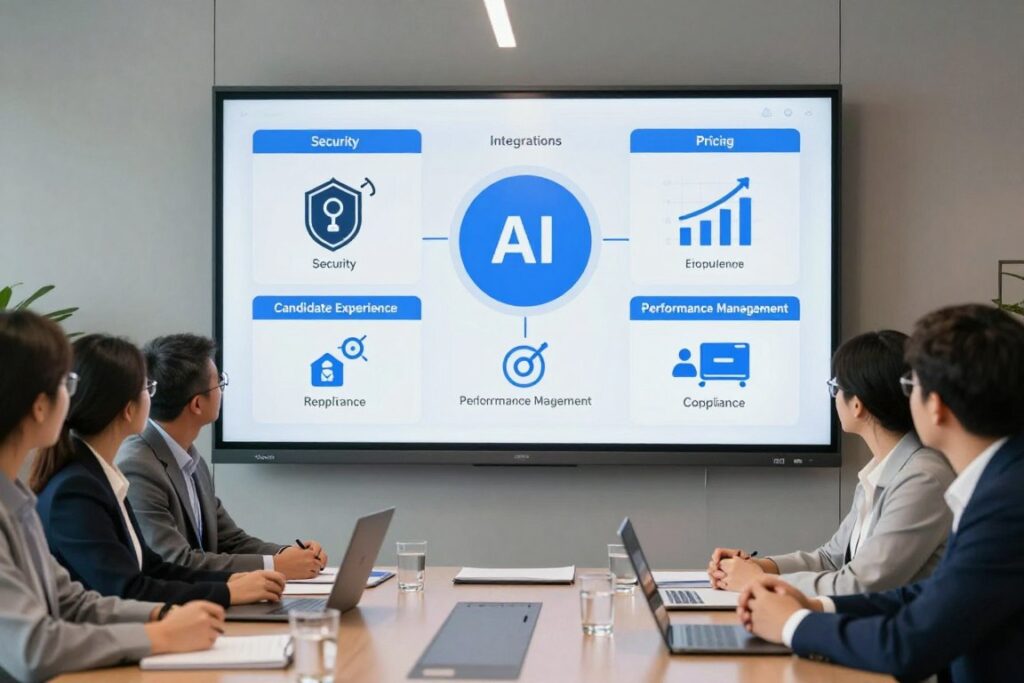
The best platform depends on the job to be done. A high-volume employer may value conversational scheduling and instant answers. A global organization may prioritize skills intelligence, data controls, and workforce insights. A growing company may need simple workflows instead of a large platform.
- Define the roles, hiring volume, locations, and workforce segments in scope.
- Map current ATS, HRIS, payroll, calendar, assessment, and identity systems.
- Separate must-have features from useful tools that do not affect the business case.
- Set measurable targets for time to screen, time to interview, completion rate, and candidate feedback.
- Require a clear explanation of AI inputs, outputs, human review, retention, and model changes.
- Review pricing as total cost, including implementation, support, usage, integrations, and renewal terms.
Eightfold AI Review
Core capabilities and use cases
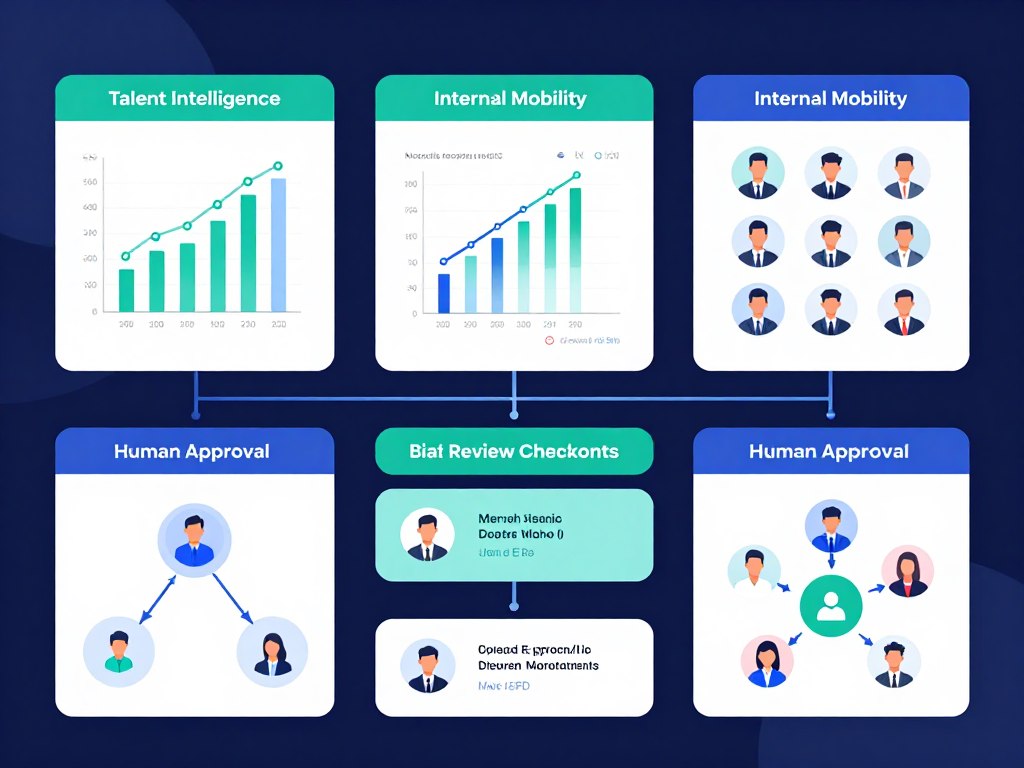
Eightfold is best evaluated by organizations seeking broad talent intelligence across recruiting, internal mobility, workforce planning, and skills management. Its value proposition centers on skills and talent insights rather than a narrow resume database.
Bias reduction and human safeguards
Buyers should request documentation on model validation, protected-attribute handling, explainability, monitoring, adverse-impact testing, and configuration controls. Do not treat an AI label as evidence that a workflow is bias-free. The employer remains responsible for decisions.
Interview scheduling and integrations
Confirm calendar support, interview panels, time-zone rules, ATS and HRIS connections, identity controls, and audit logs. Test exception handling for rescheduling, accommodations, duplicate profiles, and candidate withdrawal.
Pros, cons, pricing, and limitations
Pros
- Suitable for complex talent and skills programs
- Can support recruiting and internal workforce use cases
- Strong fit for organizations seeking broad insights
Cons
- Enterprise implementation may require significant change management
- Public monthly pricing is not generally available
- Buyers must validate integrations and measurable performance
Pricing: Custom quote. Confirm subscription, services, support, data volume, modules, renewal terms, and implementation fees. Best fit: large organizations with mature talent operations and a defined skills strategy.
iCIMS Review
Core capabilities and use cases
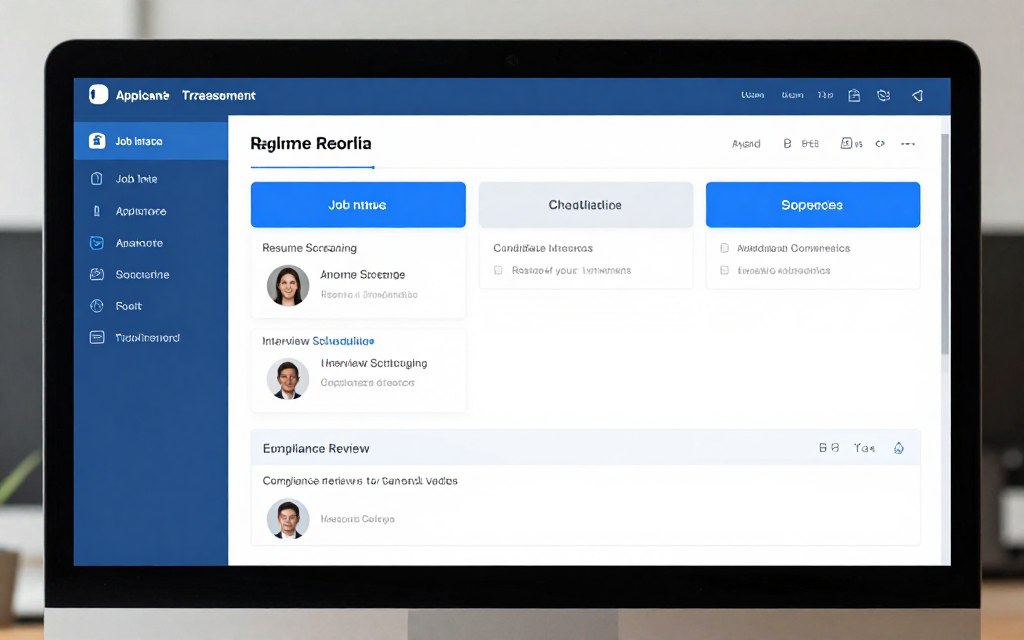
iCIMS is a strong candidate for organizations that want an established recruiting platform with applicant tracking, career-site, workflow, communication, and reporting capabilities. Its usefulness depends on the modules selected and the quality of the existing hiring process.
Bias reduction and human safeguards
Request the vendor’s current documentation for AI features, ranking logic, validation methods, accessibility, audit trails, and customer configuration. Establish human review before rejection or advancement where the tool materially influences a job opportunity.
Interview scheduling and integrations
Test calendar synchronization, panel coordination, reminders, self-scheduling, rescheduling, and candidate communications. Confirm connections to HRIS, payroll, assessments, background checks, identity providers, analytics, and collaboration tools.
Pros, cons, pricing, and limitations
Pros
- Broad ATS and recruiting workflow potential
- Useful for structured hiring teams and reporting needs
- Can centralize candidate tracking and recruiting tasks
Cons
- Feature availability varies by package and contract
- Customization can increase implementation time
- Public monthly pricing is not verified
Pricing: Custom quote. Ask for a complete cost model based on users, requisitions, candidates, locations, integrations, onboarding, and support. Best fit: mid-market and enterprise organizations seeking a structured ATS foundation.
Paradox Review
Core capabilities and use cases
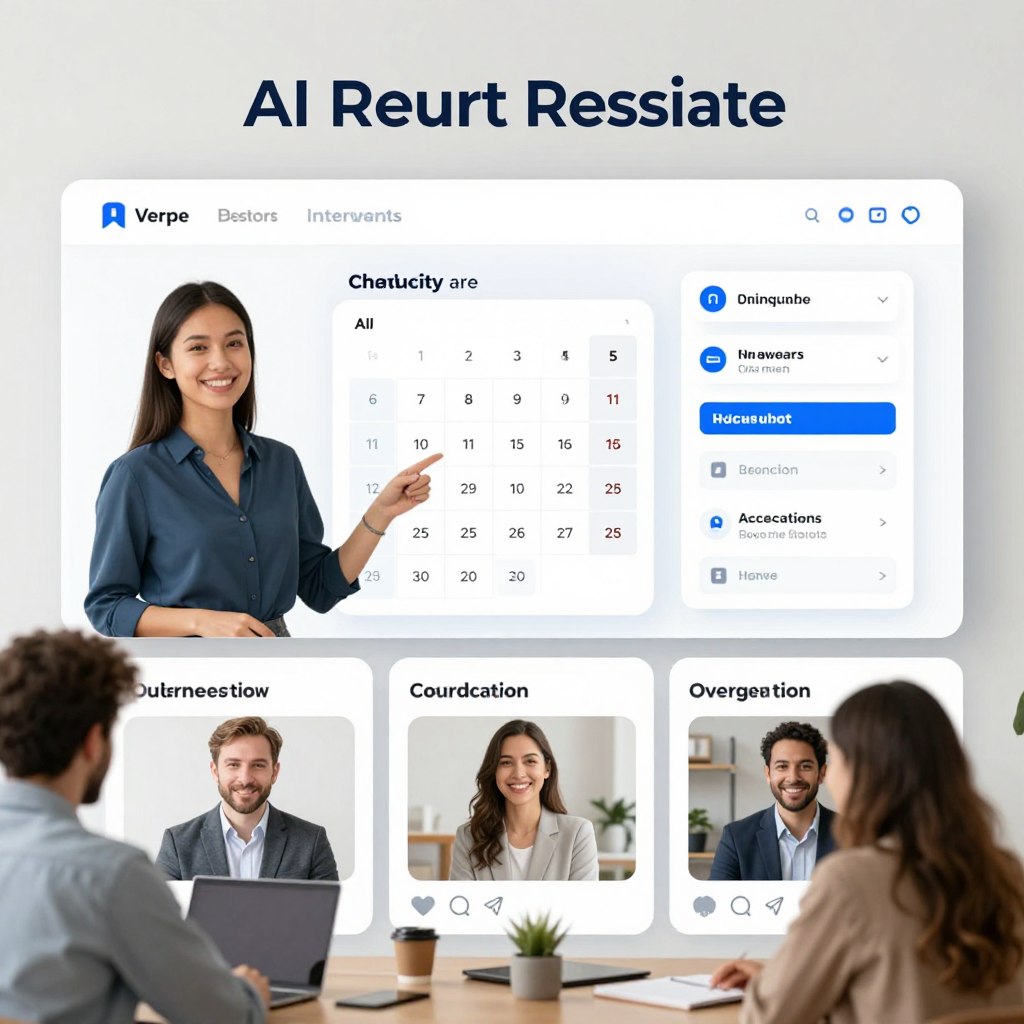
Paradox is particularly relevant to high-volume recruiting environments where candidate communication, screening questions, interview scheduling, and status updates create a heavy workload. Retail, hospitality, healthcare, and other volume-driven teams should test the full candidate journey.
Bias reduction and human safeguards
Review question design, language support, accessibility, escalation, auditability, and the effect of automated qualification rules. Screen-out logic should be validated with representative data and reviewed by recruiting and legal stakeholders.
Interview scheduling and integrations
Evaluate calendar logic, hiring-manager availability, location rules, reminders, cancellations, and handoff to human recruiters. Confirm ATS integration, application updates, duplicate prevention, and records of candidate communications.
Pros, cons, pricing, and limitations
Pros
- Strong potential for high-volume candidate engagement
- Can reduce repetitive scheduling and status tasks
- Supports faster responses and a consistent workflow
Cons
- Conversational automation requires careful content governance
- Complex roles may need human qualification
- Pricing and integration scope require a vendor proposal
Pricing: Custom quote. Request costs by hiring volume, users, locations, messaging, integrations, implementation, and support. Best fit: organizations measuring candidate response time and scheduling capacity.
HireVue Review
Core capabilities and use cases
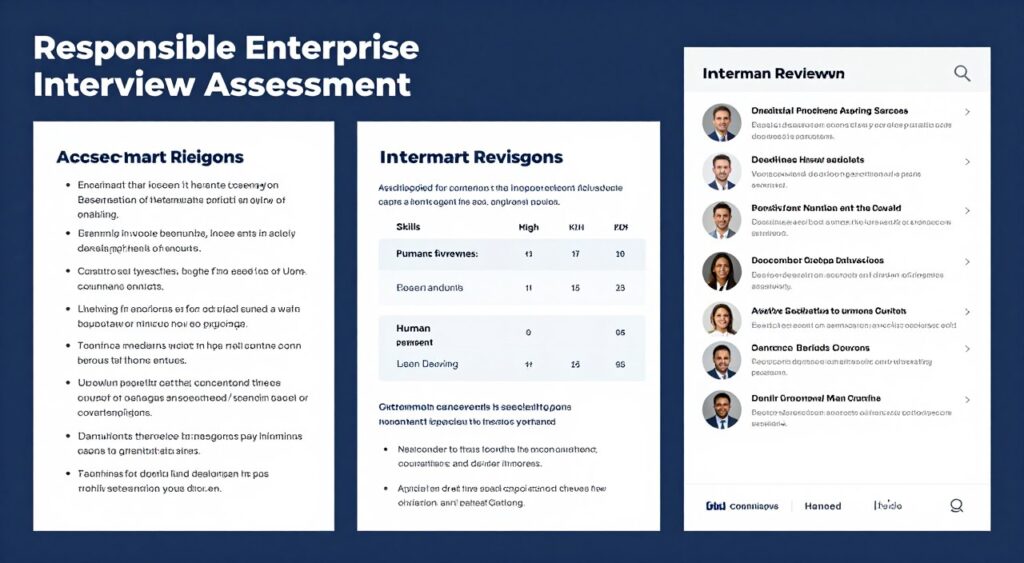
HireVue is relevant to organizations evaluating structured interviews, assessments, scheduling, and recruiting workflow automation. The buyer should separate validated assessment methods from unsupported assumptions about personality, emotion, or appearance.
Bias reduction and human safeguards
Ask for validation studies, job-relatedness evidence, accommodation procedures, candidate notice, data retention, reviewer training, and adverse-impact monitoring. Do not deploy a feature that cannot be explained to candidates and internal decision makers.
Interview scheduling and integrations
Test invitation flows, time zones, reminders, mobile access, accessibility, rescheduling, reviewer permissions, and ATS transfer. Confirm whether assessment results remain available for audit and how deleted candidate records are handled.
Pros, cons, pricing, and limitations
Pros
- Useful for structured assessment workflows
- Can standardize interview tasks across teams
- Supports a measurable candidate process when configured well
Cons
- Assessment validity must be reviewed for each job family
- Candidate trust can fall without clear notice and human access
- Pricing is generally quote-based
Pricing: Custom quote. Request module-level pricing, assessment volume, user access, integrations, support, validation, and implementation costs. Best fit: structured hiring programs with strong governance.
Workday Recruiting Review
Core capabilities and use cases
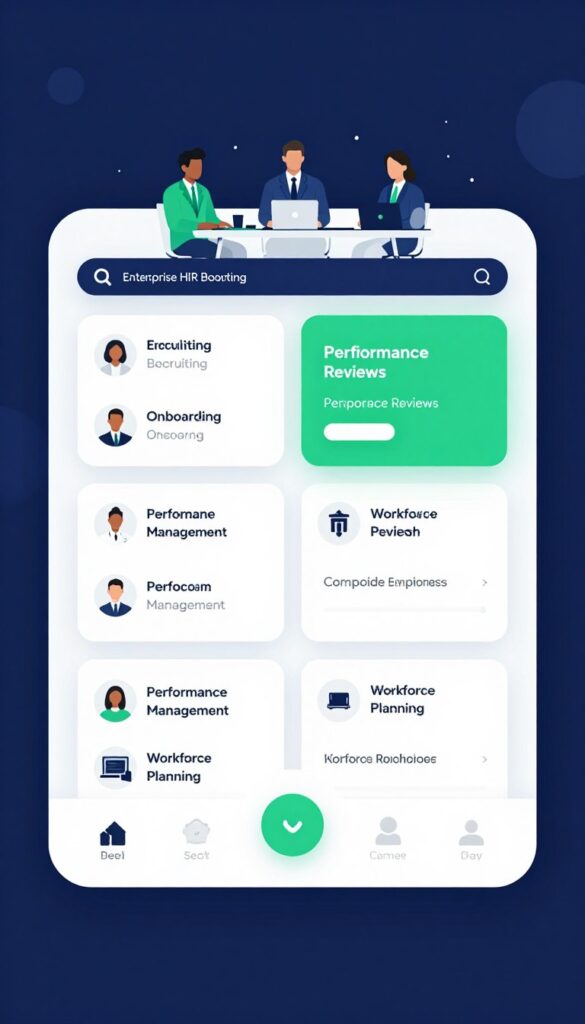
Workday Recruiting should be considered by organizations already using or evaluating a broad human capital management platform. The strongest case is a connected system for recruiting, onboarding, employee records, performance reviews, performance management, talent, and workforce insights.
Bias reduction and human safeguards
Validate the controls attached to each AI capability. Review permissions, recommendation explanations, job-related criteria, monitoring, candidate notification, and human approval. HR and legal owners should document who can override a recommendation and why.
Interview scheduling and integrations
Confirm calendar, email, identity, background-check, assessment, payroll, learning, onboarding, and reporting connections. A connected platform can reduce duplicate data entry, but configuration errors can spread across workflows and teams.
Pros, cons, pricing, and limitations
Pros
- Broad HR, talent, employee, and workforce capabilities
- Useful for connected data and management workflows
- Strong option for organizations standardizing enterprise HR systems
Cons
- May be excessive for a single recruiting problem
- Implementation and change management can be substantial
- Pricing requires a tailored enterprise proposal
Pricing: Custom quote. Request separate costs for recruiting, talent, performance management, employee engagement, integrations, implementation, support, and renewal. Best fit: large organizations seeking a broad HR platform rather than a standalone tool.
Features That Matter Beyond Resume Screening
Recruiting automation
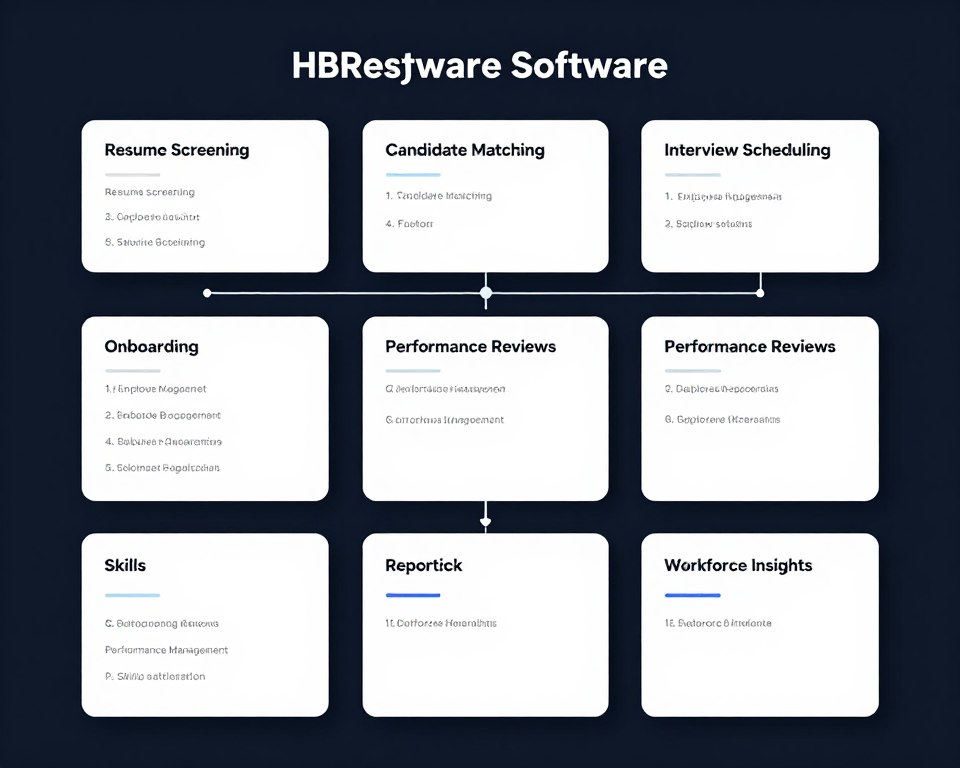
Review screening, candidate tracking, interview scheduling, communications, job distribution, interview feedback, offer workflows, and recruiting analytics. Confirm which tasks are automated and which still require team approval.
- Structured job intake
- Skills-based candidate search
- Calendar and panel automation
- Candidate status updates
Employee and talent workflows
Broader HR platforms may connect hiring to onboarding, employee engagement, performance reviews, performance management, learning, mobility, and workforce planning. These connections can improve insights but increase governance needs.
- Onboarding task management
- Employee feedback and engagement surveys
- Talent and skills profiles
- Performance review workflows
Enterprise controls
Security, access, audit trails, retention, integrations, data exports, and reporting often determine whether tools can scale. Ask for practical demonstrations, not only a feature brochure.
- Role-based access
- Data minimization
- Audit and reporting tools
- Vendor incident response process
Implementation Guide for US HR Teams

Human oversight and accountability
Assign an accountable business owner before configuration begins. Define which recommendations are advisory, which actions require review, and who handles an appeal. Hiring managers must be able to inspect relevant evidence rather than accept an opaque score.
Bias testing and monitoring
Test tools with representative historical and synthetic data. Review selection rates, false positives, false negatives, accessibility outcomes, language effects, and differences across legally protected groups where lawful and appropriate. Repeat testing after model, job, data, or workflow changes.
Notice, transparency, consent, and privacy
Tell candidates when automation materially affects the process. Explain the purpose, information used, human review, accommodation route, and contact method in plain language. Collect consent when required, minimize data, limit retention, restrict access, encrypt sensitive records, and document deletion requests.
US regulations and local requirements
Legal review should consider Title VII, the Americans with Disabilities Act, the Age Discrimination in Employment Act, the Genetic Information Nondiscrimination Act, the Fair Credit Reporting Act where background reports are involved, and applicable state privacy laws. Teams should also review state and local automated-employment-decision requirements, including notice, testing, disclosure, and recordkeeping rules that may change over time.
Accessibility and reasonable accommodation
Offer an accessible alternative to automated assessments and interviews. Provide a clear request channel, avoid unnecessary biometric or behavioral inference, and ensure that disability-related information is handled separately and securely. Test keyboard navigation, screen-reader support, captioning, timing, and mobile access.
Vendor due diligence
Request model documentation, subprocessors, data-flow diagrams, retention schedules, security materials, accessibility information, incident procedures, service levels, change notices, audit rights, and deletion commitments. Confirm whether customer data trains models and whether the vendor can support an investigation.
Phased Enterprise Deployment Checklist
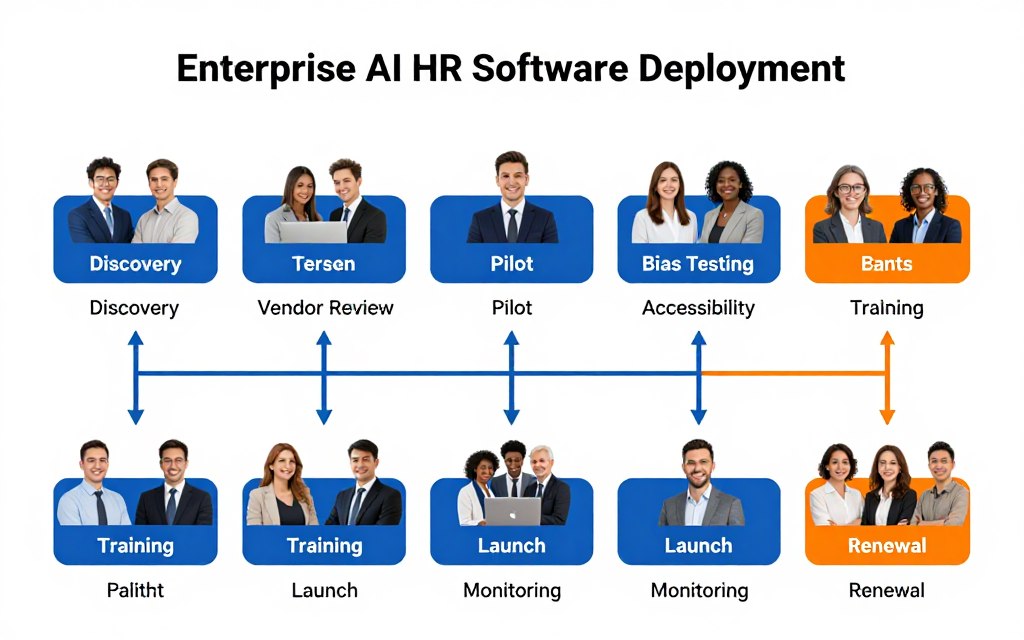
- Discover: document hiring pain points, roles, volumes, systems, employee engagement goals, candidate needs, and success measures.
- Govern: appoint HR, legal, IT, security, recruiting, accessibility, and procurement owners.
- Evaluate: compare tools, features, integrations, pricing, privacy, auditability, support, and implementation requirements.
- Pilot: select limited job families and teams. Keep a documented human decision path.
- Validate: test quality, bias, accessibility, security, candidate feedback, interview completion, and time savings.
- Train: teach users how to interpret recommendations, record feedback, handle exceptions, and escalate concerns.
- Launch: publish candidate notices, accommodation instructions, privacy information, and internal operating procedures.
- Monitor: review performance, adverse impact, complaints, data access, model changes, and employee feedback on a scheduled basis.
- Renew or replace: compare results with the business case and renegotiate scope, pricing, controls, or service levels.
Do not make a hiring decision solely because a platform produces a score, ranking, match, or recommendation. Automation can support work, but accountability remains with the employer.
Enterprise Buyer Evaluation Request
Use this form structure to collect qualified leads without asking for sensitive candidate information. The desired action is a practical software evaluation, not an unqualified sales inquiry.
Best AI HR Software FAQs
What is the best AI HR software for a large enterprise?
There is no universal winner. Workday may suit organizations seeking broad HR and talent management. Eightfold may suit skills-based talent intelligence. iCIMS may suit ATS-centered recruiting operations. Paradox may suit high-volume communication and scheduling. HireVue may suit structured assessment programs. Validate each use case, price, integration, and control.
Can AI tools remove bias from hiring?
No tool can guarantee a bias-free process. AI can make workflows more consistent, but training data, job criteria, configuration, and human decisions can still create unequal outcomes. Use validation, monitoring, accessibility testing, and documented human oversight.
How should companies compare pricing?
Compare total cost rather than a monthly license alone. Include implementation, integrations, users, hiring volume, support, security review, data migration, custom work, renewal terms, and exit costs. Label public pricing, custom quotes, and unavailable pricing separately.
Should candidate matching accuracy be a buying metric?
It can be useful only when the definition, test set, job context, baseline, and independent validation are clear. A single vendor accuracy number is not comparable across platforms. Also measure qualified applicants, interview quality, adverse impact, candidate feedback, and hiring outcomes.
What is the most effective CTA for this article?
A low-pressure evaluation CTA works best. Readers are comparing platforms, not necessarily ready to buy immediately. Offer a checklist, request for requirements, or guided shortlist after presenting evidence. Use product links only where the review establishes a clear fit.
Final Recommendation for Enterprise HR Leaders

The best AI HR software is the platform that solves a defined workforce problem without weakening fairness, privacy, accessibility, or accountability. Start with the hiring workflow, not the marketing label. Measure time, quality, engagement, candidate experience, and performance against a documented baseline.
For broad HR transformation, assess Workday. For skills intelligence, assess Eightfold. For ATS-centered recruiting, assess iCIMS. For high-volume scheduling and candidate communication, assess Paradox. For structured assessments, assess HireVue. Treat every capability, integration, price, and compliance claim as something to verify in writing.
Move from Shortlist to Safe Pilot
Define one hiring workflow, select measurable outcomes, involve legal and IT, and request a vendor demonstration using your real operating requirements.