

Protective is the overall editorial choice for many seniors over 60 who can qualify for traditionally underwritten coverage. Pacific Life is a strong term-life option, while Mutual of Omaha is a practical fit for final expenses and guaranteed-issue coverage. Equitable may help very old applicants where qualifying products remain available, and MassMutual suits some seniors seeking permanent whole-life protection for legacy planning.
The best life insurance for seniors changes with age, health, budget, coverage goal and policy type. Term life, whole life, final expense and guaranteed-issue insurance are not interchangeable. Use this guide to compare the trade-offs before requesting life insurance quotes.
Best Life Insurance for Seniors: Quick Picks

Best overall — Protective
Protective is positioned for seniors over 60 who may need substantial coverage and can qualify through traditional underwriting. Its fit depends on current issue-age rules, term length, health and state availability.

Best term life — Pacific Life
Pacific Life is suited to applicants seeking temporary protection for a mortgage, spouse, business obligation, debt or estate liquidity need.

Best final expense and guaranteed issue — Mutual of Omaha
Mutual of Omaha may be relevant when an applicant wants a smaller permanent death benefit and has difficulty qualifying for traditionally underwritten coverage.
Best for seniors 80+ — Equitable
Equitable deserves consideration only after confirming current issue ages, product structure and state availability. Options become more limited at advanced ages.
Best whole life and legacy planning — MassMutual
MassMutual may suit applicants seeking lifelong coverage, guaranteed cash value and a long-term estate or legacy objective.
Start with the coverage goal
Compare policy types before comparing prices. A low premium is not useful if the policy ends too soon or has a limited death benefit.
How We Evaluated the Best Life Insurance for Seniors

This comparison separates factual product features from editorial conclusions. Current insurer documents, state availability, policy forms and financial-strength sources should be checked before publication or application. An insurer’s product may not be available in every state or for every age and health profile.
- Affordability and value — 25%
- Maximum issue ages and accessibility — 20%
- Policy options — 15%
- Financial strength — 15%
- Underwriting flexibility — 10%
- Customer complaint and service indicators — 5%
- Conversion options and riders — 5%
- Digital buying experience — 5%
The review should examine term life, whole life, universal life insurance, final expense, guaranteed issue, coverage amounts, issue age, medical exam rules, health questions, policy conversion, riders, AM Best information and NAIC complaint data. No internal premium dataset should be implied unless one is actually available.
Protective — Best Overall Life Insurance for Seniors Over 60

Best for
Protective is best framed as an option for seniors who still need meaningful income replacement, mortgage protection or spouse support and may qualify for traditional underwriting.
Policy options
Review Protective Classic Choice Term and relevant permanent or universal life insurance products. Confirm current 10-year, 15-year and 20-year term availability, maximum issue ages, face amounts, conversion rules and riders from current policy materials. Do not assume a term available to a 60-year-old is available to an 80-year-old.
Eligibility and underwriting
Traditional underwriting may consider medical history, prescriptions, tobacco use, build, occupation and other risk factors. Accelerated underwriting eligibility can vary and does not mean every applicant avoids a medical exam.
Pros and cons
Pros
- May offer larger coverage than final expense products.
- Can fit mortgage and income-replacement needs.
- Term conversion may support changing needs if available under the policy.
Cons
- Eligibility and maximum issue age vary by policy and term.
- Traditional underwriting may be difficult for some health profiles.
- Term coverage may end before the policyholder’s lifetime need.
Bottom line
Protective is a strong overall candidate when a senior needs more than burial insurance and can qualify for traditionally underwritten life coverage. Verify current product documents before ranking it for a specific age.
Pacific Life — Best Term Life Insurance for Seniors

Best for
Pacific Life may fit an older adult who needs protection for a defined period rather than lifelong coverage. Possible goals include remaining mortgage years, spousal income support, business obligations, short-term debt or estate liquidity.
Term options and coverage
Review PL Promise Term and Pacific Elite Term separately. Product names, term periods, minimum coverage, issue ages and conversion provisions may differ. Do not state that every Pacific Life term product offers the same available term life choices.
Underwriting and riders
Confirm whether a medical exam, health questions or accelerated underwriting applies to the applicant. Review any accelerated death benefit riders, conversion deadline and renewal terms in the actual policy materials.
Pros and cons
Pros
- Term life can provide a large temporary death benefit.
- May suit a specific financial obligation.
- Conversion can be valuable if included and exercised on time.
Cons
- Coverage may expire while the policyholder is alive.
- Older applicants may face higher premiums or shorter terms.
- Product availability varies by age, health and state.
Bottom line
Pacific Life is a leading term-life candidate for seniors who can define how long coverage is needed. It is not automatically the best choice for final expenses or permanent legacy planning.
Mutual of Omaha — Best for Final Expense and Guaranteed-Issue Life Insurance

Best for
Mutual of Omaha is a candidate for final expense insurance, burial insurance and smaller permanent coverage goals. It is not generally designed to replace a large amount of lost income.
Guaranteed Whole Life features
Where currently available, verify the official product’s issue ages, coverage limits, state rules and premium structure. A guaranteed-issue policy may require no medical exam and no health questions, but guaranteed acceptance applies only to the exact policy that provides it.
Limited-benefit period
Explain the initial limited-benefit period prominently. Under current product terms, natural-cause death during the first two years may result in a return of premiums plus an additional percentage instead of the full death benefit. Accidental-death provisions and state variations must be confirmed in the policy contract.
Appropriate uses
- Funeral expenses and burial costs.
- Final medical bills and small debts.
- A modest inheritance or immediate cash need for beneficiaries.
Pros and cons
Pros
- May not require a medical exam or health questions.
- Can provide permanent coverage for a small need.
- Fixed premiums may simplify budgeting.
Cons
- Coverage is usually much smaller than income-replacement coverage.
- Guaranteed issue can cost more per dollar of death benefit.
- The graded or limited-benefit period is important.
Bottom line
Mutual of Omaha is most relevant when the goal is a modest final expense benefit and traditional underwriting is not suitable. Compare the full premium and limited-benefit language before applying.
Equitable — Best Life Insurance for Seniors 80 and Older

Best for
Equitable may be worth checking for very old applicants when a current product remains available and the applicant meets its underwriting rules. Availability must be confirmed by state, age and product.
Policy structure
Review whether TermOne is currently offered, the exact issue ages, coverage amounts, one-year term structure, renewal provisions and underwriting requirements. A one-year renewable product should not be described as a traditional 10-year, 20-year or 30-year level-term policy.
Limitations
For applicants age 80 and older, options often narrow. Premiums may be higher, coverage may be lower, underwriting may be stricter and term duration may be shorter. These are common market patterns, not universal rules.
Alternatives
Compare final expense, guaranteed-issue and permanent insurance if a short-term product does not meet the applicant’s goal. The best type life insurance depends on the need, available budget and policy contract.
Bottom line
Equitable belongs in an advanced-age comparison only after current eligibility is verified. Do not imply that every applicant age 80 or older can obtain coverage.
MassMutual — Best Whole Life Insurance for Legacy Planning

Best for
MassMutual may suit seniors with a permanent coverage need, a legacy goal, estate planning objective, dependent or long-term final expense obligation.
Whole-life features
Whole life insurance is designed to remain in force when premiums are paid and policy conditions are met. Review the guaranteed death benefit, guaranteed cash value, premium structure, participating status and available riders in the specific policy.
Cash value and dividends
Cash value can build according to the contract, but access through loans or withdrawals may affect the death benefit and policy performance. Dividends are not guaranteed. Whole life should not be presented as equivalent to a diversified brokerage account.
Who may not need it
A senior with sufficient assets, no dependents, no permanent insurance need or a very limited budget may not benefit from purchasing new whole life coverage.
Bottom line
MassMutual is a candidate for lifelong coverage and legacy planning, not a universal solution for every older adult. Compare the guaranteed values with the premium commitment.
Protective vs Pacific Life vs Mutual of Omaha vs Equitable vs MassMutual
| Company | Best use case | Policy type | Maximum issue age | Term coverage | Whole life | Guaranteed issue | Medical exam | Health questions | Coverage amount | Premium structure | Conversion | Cash value | Final-expense suitability | Legacy suitability | Financial strength | Online buying | Primary drawback |
| Protective | Larger needs for qualifying seniors | Term and permanent options | Varies by policy | Review current terms | Verify current availability | Not assumed | Varies | Likely by underwriting path | Varies | Depends on policy | Verify contract | Permanent policies may have it | Limited | Moderate to high | Verify current AM Best data | Varies | Eligibility complexity |
| Pacific Life | Temporary protection | Term and permanent options | Varies by product | Product-specific | Verify current availability | Not assumed | Varies | Varies | Product-specific | Level or product-specific | Verify product rules | Not typical of term | Limited | Depends on policy | Verify current AM Best data | Varies | Coverage may expire |
| Mutual of Omaha | Final expenses | Guaranteed whole life and other products | Verify state and product | Not the primary focus here | Yes for relevant products | Product-specific | May be no exam | May be none for guaranteed issue | Usually smaller for final expense | Fixed by policy terms | Product-specific | May accumulate | High | Modest goals | Verify current AM Best data | Varies | Limited-benefit period |
| Equitable | Very old applicants where available | Product-specific term and permanent | Verify current product | May be short-term structure | Verify current availability | Not assumed | Varies | Varies | Verify current limits | Product-specific | Verify contract | Permanent policies may have it | Possible alternative | Depends on policy | Verify current AM Best data | Varies | Narrow advanced-age availability |
| MassMutual | Permanent legacy planning | Whole life and permanent options | Varies by policy | Verify current availability | Primary focus | Not assumed | Varies | Varies | Product-specific | Guaranteed and policy-specific | Verify contract | Yes in whole life | Possible | High for suitable buyers | Verify current AM Best data | Varies | Long premium commitment |
The main buying difference is purpose. Protective and Pacific Life are most relevant to larger or temporary needs. Mutual of Omaha focuses on smaller final expenses. Equitable requires careful advanced-age verification. MassMutual is aimed at permanent protection and legacy planning.
Best Life Insurance for Seniors by Age

Age 60–64
Compare term life, permanent coverage and accelerated underwriting. Health may matter as much as age.

Age 65–69
Term may remain useful for debt or income replacement, while final expense can address a smaller need.

Age 70–74
Compare shorter available term life and permanent options. Premiums and underwriting can become more important.
Age 75–79
Coverage amounts may narrow. Review final expense, guaranteed issue and permanent alternatives.
Age 80+
Verify issue age, state availability, renewal rules and waiting periods before applying.
Term Life Insurance for Seniors
Term life provides a death benefit for a stated period. It can be useful for a mortgage, business obligation or spouse income need that will end on a known schedule. It may not fit a permanent funeral or legacy goal.
Whole Life Insurance for Seniors
Whole life can provide lifelong coverage with cash value under the policy contract. It usually requires a longer premium commitment and may cost more than term coverage for the same initial death benefit.
Final Expense and Guaranteed-Issue Life Insurance
Final expense insurance is designed for a smaller need such as funeral expenses, burial costs or final bills. Guaranteed-issue insurance may accept applicants without health questions, but it often has lower coverage, a higher cost per dollar and a graded death benefit.
| Policy type | Typical coverage goal | Coverage duration | Underwriting | Cash value | Relative cost | Best for | Main limitation |
| Term life | Income or debt protection | Defined term | Often required | No | Often lower initially | Temporary needs | May expire |
| Whole life | Permanent death benefit | Lifelong if conditions are met | Varies | Yes | Often higher | Legacy planning | Premium commitment |
| Final expense | Funeral and final bills | Often permanent | Simplified or limited | May be available | Varies | Small expenses | Lower benefit |
| Guaranteed issue | Access despite health concerns | Often permanent | No health questions for the exact product | May be available | Can be higher | Applicants unable to qualify elsewhere | Graded death benefit |
How Much Does Life Insurance for Seniors Cost?

Factors that affect premiums
Age, health, tobacco use, sex where legally permitted, state, coverage amount, term length, medical history, prescription history and underwriting class can affect a premium.
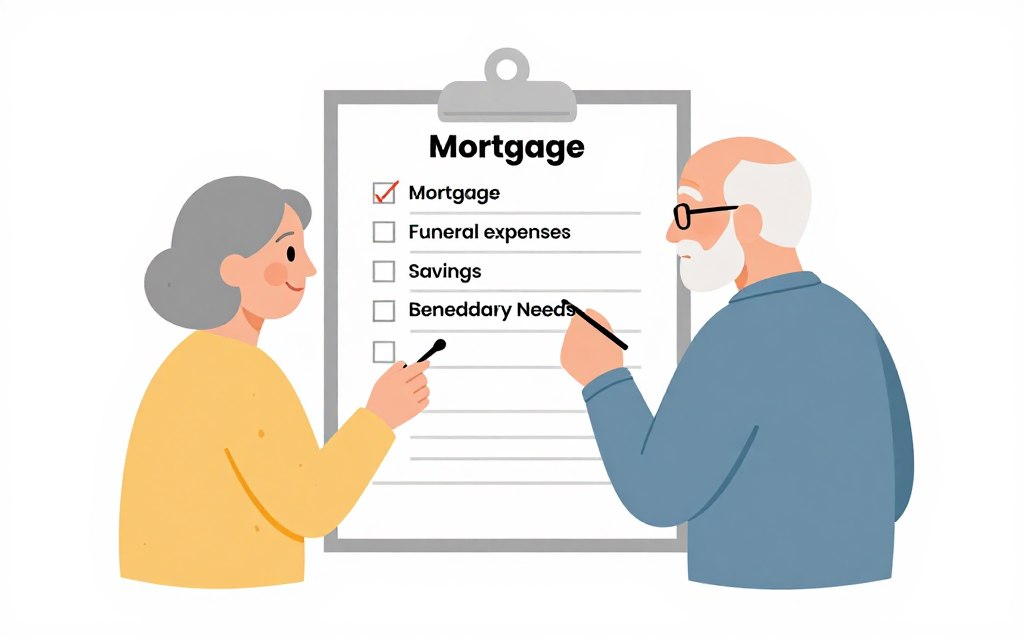
How much coverage is needed?
Consider debts, funeral expenses, final medical costs, mortgage, spouse income, dependents, estate costs, business obligations, savings, current life coverage and Social Security survivor benefits where applicable.
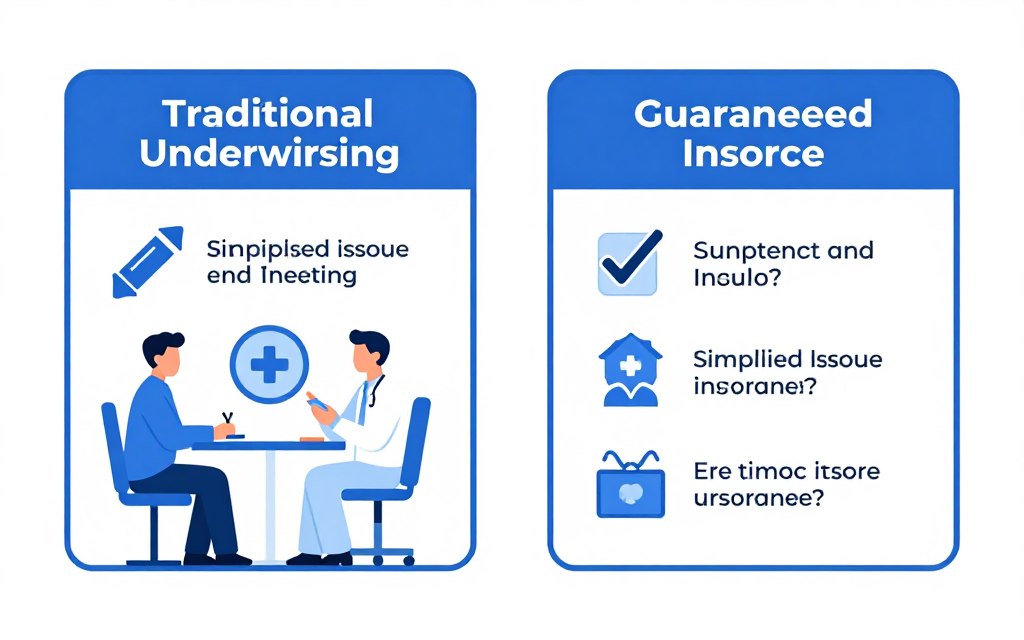
No-exam and guaranteed issue coverage
Accelerated underwriting may remove an exam for some applicants. Simplified issue may still ask health questions. No medical exam does not mean guaranteed acceptance.
Traditional underwriting, simplified issue and guaranteed issue
Traditional underwriting may use health records, a medical exam and detailed questions. Accelerated underwriting can use electronic data and may not require an exam for an eligible applicant. Simplified issue usually asks fewer questions, while guaranteed issue generally removes health underwriting only where the policy explicitly promises that feature.
When life insurance may not be necessary
Some seniors may not need new coverage. This may be true when dependents are financially independent, debts are paid, final expenses are funded, assets are sufficient or existing life insurance already meets the need.
Compare before you apply
Review the policy type, coverage amount, premium, beneficiary rules, waiting period and cancellation terms. Rates and eligibility are personal.
How to Choose Life Insurance as a Senior
- Define the financial need and how long it will last.
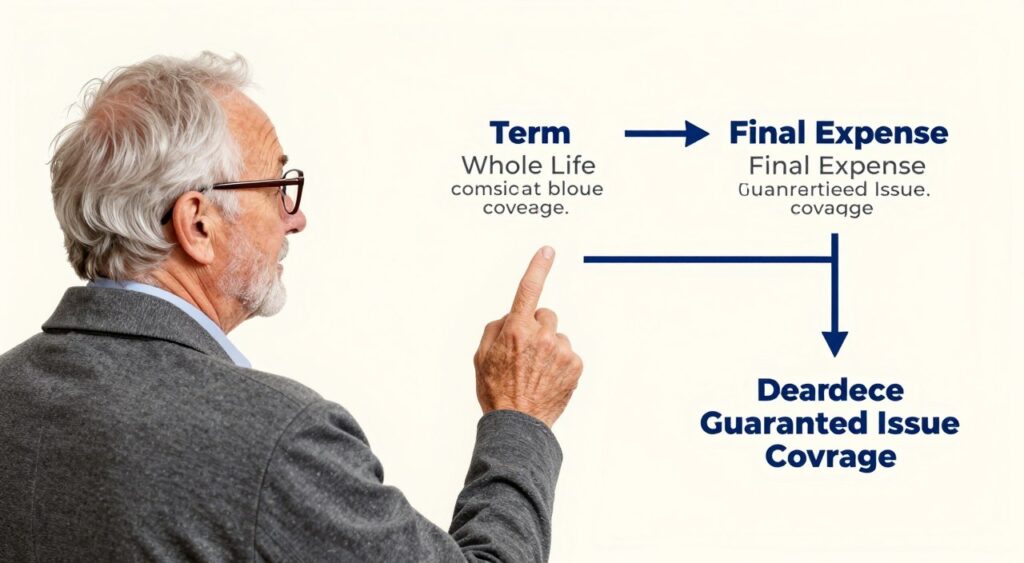
- Choose between term life, whole life, final expense and guaranteed issue.
- Check the maximum issue age, state availability and available term.
- Compare health questions, medical exam rules and underwriting.
- Review the premium, death benefit, beneficiary rules and waiting period.
- Check financial strength, NAIC complaint information and policy conversion.
- Review riders, including living benefits and accelerated death benefit features.
- Compare multiple quotes when the policies are genuinely comparable.
Choose Protective if…
You need substantial coverage for a mortgage, spouse or income obligation and may qualify for traditional underwriting.
Choose Pacific Life if…
You need temporary term life coverage and understand when the policy ends or can be converted.
Choose Mutual of Omaha if…
Your main goal is final expense coverage and a guaranteed-issue product’s limited-benefit rules are acceptable.
Choose Equitable if…
You are an older applicant and have confirmed that a current, suitable product is available in your state.
Choose MassMutual if…
You need permanent coverage for legacy planning and can support the required premium commitment.
Internal resources
Link to best term life insurance companies and best no-exam life insurance. Future supporting content can cover best life insurance over 50, best life insurance for smokers, best whole life insurance companies, best final expense insurance, life insurance rates by age, term vs whole life insurance and how much life insurance do I need.
Commercial-intent FAQ
What is the best life insurance for seniors?
Protective may suit many over-60 applicants who qualify for traditional underwriting. Pacific Life is a term candidate, Mutual of Omaha may fit final expenses, Equitable requires advanced-age verification and MassMutual may suit permanent legacy planning.
What is the cheapest life insurance for seniors?
There is no universal cheapest option. Term life may cost less initially than permanent coverage, but the result depends on age, health, tobacco use, state, benefit amount and underwriting.
Can a 70-year-old get life insurance?
Often, yes, but available products, term lengths, coverage amounts and premiums vary by carrier, state and health profile.
Can an 80-year-old get life insurance?
Some products may be available, but issue ages and underwriting rules become more restrictive. Final expense or permanent coverage may be alternatives.
What is the best life insurance for seniors over 65?
The answer depends on the goal. Compare term life for temporary obligations, whole life for permanent needs and final expense coverage for a smaller funeral or burial benefit.
What is the best life insurance for seniors over 70?
Compare policies that accept the applicant’s age and health profile. Do not assume that a product available at 70 is available at 75 or 80.
Can seniors get life insurance without a medical exam?
Some policies use simplified issue, accelerated underwriting or guaranteed issue. Without a medical exam does not necessarily mean without medical questions or guaranteed acceptance.
Is term or whole life better for seniors?
Term may fit a temporary obligation. Whole life may fit a permanent need, but it can require higher premiums and a long commitment.
How much life insurance should a senior have?
Calculate the actual need from debts, funeral costs, income support, dependents, assets and existing coverage. Some seniors need little or no new insurance.
What is the difference between final expense and life insurance?
Final expense is life insurance designed for a smaller benefit, often for funeral and final bills. A broader policy may provide more coverage for income replacement, debt or legacy goals.
Is guaranteed-issue life insurance worth it?
It may be useful when health prevents other coverage, but compare its premium, coverage amount and graded death benefit against alternatives.
At what age can you no longer buy life insurance?
There is no single cutoff. Each carrier and policy sets issue-age rules, and availability can vary by state, term length, health and tobacco status.
Make the next step fit the need
Compare senior life insurance quotes only after deciding whether you need term, whole life, final expense or guaranteed-issue coverage.
Conclusion
Protective is a strong overall candidate for many qualifying seniors over 60, Pacific Life is suited to temporary term needs, Mutual of Omaha focuses on final expenses, Equitable requires careful review for advanced-age applicants and MassMutual may fit permanent legacy planning. The right decision depends on age, health, budget, coverage goal, policy structure and state availability.